Congratulations to graduating seniors Emily Hong, Asher Labovich, and Joseph Oduro, recipients of the Data Science Institute’s 2026 Senior Awards in Public Service, Research Excellence, and Outstanding Service.
Read Article
Data Science Institute
2026 Graduating Student Spotlights
Congratulations to the 2026 graduating students from our Data Science, Computational Biology, and Technological Responsibility programs! Get to know some of our graduating students and the extraordinary contributions they've made during their time at Brown.
This page will be updated with student spotlights leading up to Commencement 2026!
Computational Biology Undergraduate Students
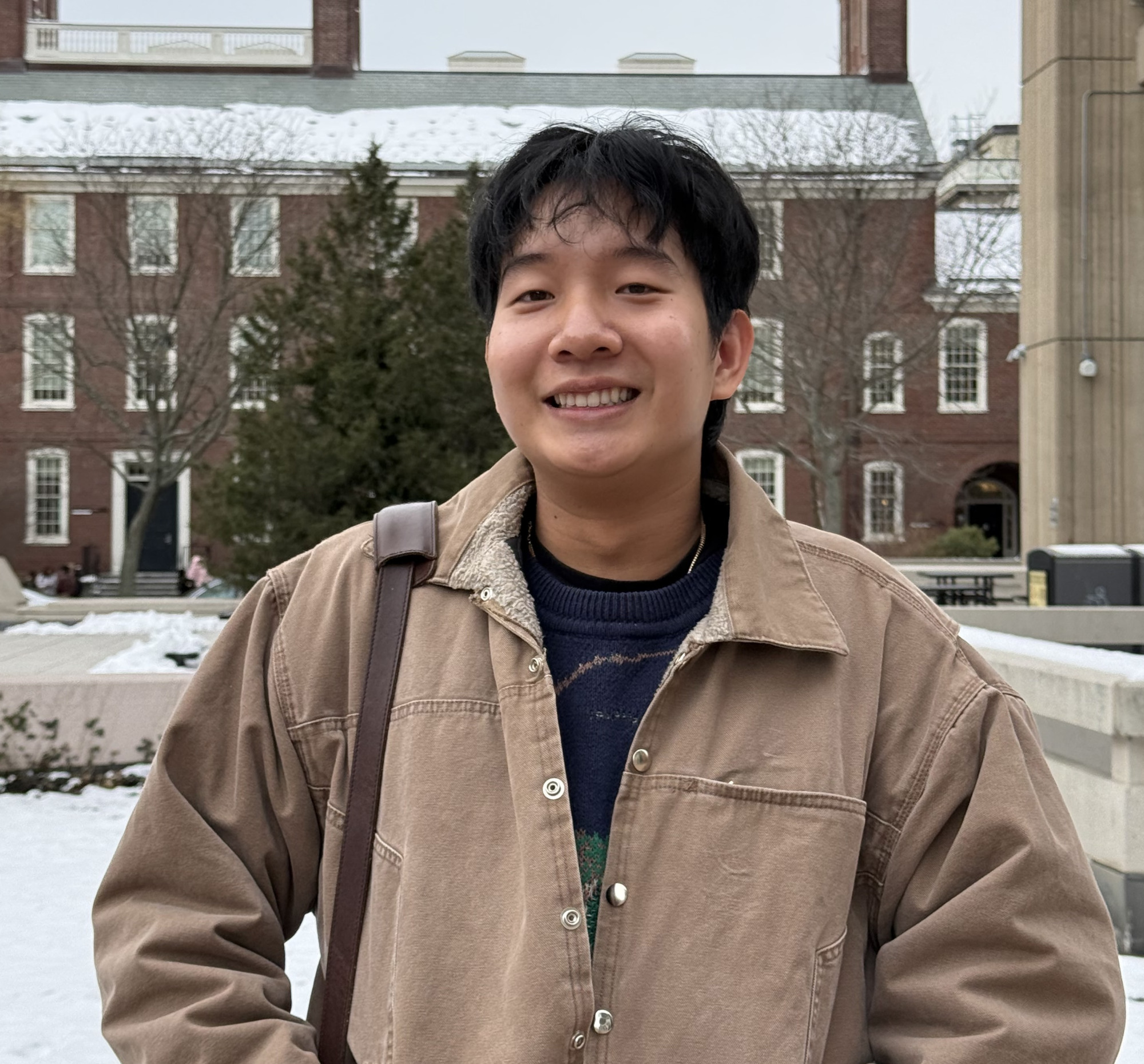
Luke Nguyen is a graduating senior in computational biology who has spent his time at Brown exploring computational biology through research with the Bailey Lab and supporting student communities like the Vietnamese Student Association and the Brown Research Club.
Luke is passionate about finding patterns in health data that can improve patient care, and he hopes to become a physician scientist in the future.
Luke plans to take the collaborative and innovative spirit of Brown with him in his future endeavors, and he urges current and future students to step outside their comfort zones to explore all that Brown has to offer.
Fields of Interest
I would like to work in translational computational biology research. There is just so much health data out there. There are countless interesting patterns and trends that can improve patient care, and we just need to go out there and find them!
How did your Concentration in Computational Biology impact your time at Brown and your future path?
The computational biology degree really let me specialize and allowed me to explore a field that is not typically catered towards undergraduates. When I came to Brown, I was really unsure of what comp bio would entail, but the CCMB and associate faculty gave me a great personalized education that allowed me to explore what I found most interesting.
Which research and extracurricular experiences have shaped your time at Brown?
I really liked my time in research. Specifically, my work in the Bailey Lab at Brown and the Schultz Lab in New York. They gave me the space to explore the scientific process and do research on topics that genuinely interested me.
I also enjoyed my time in the Vietnamese Student Association and the Brown Research Club, as they gave me spaces to help support those around me! I hope that wherever life takes me, I carry the same collaborative and innovative nature that I learned here at Brown.
What has been your favorite part of being a student at Brown?
The warm Fall and Spring days outside!
What is next for you?
I will be working as a computational biologist for two years with the longer term goal of becoming a physician scientist.
What advice would you give to the students who come after you?
Don't be afraid to try new things! There is so much out there to learn and do, especially if you step a bit out of your comfort zone.
Which advisors or mentors have inspired you throughout your degree?
I would like to thank Jeff Bailey, Cliff Oduor, Nikolas Schultz, and Eric Salomaki for being amazing research mentors who have guided my journey as a beginning scientist. I'd also like to thank Professors Daniel Weinreich, Christina Cuomo, Katherine Siddle, Sorin Istrail, and Eric Morrow for teaching me the groundwork of such an expansive and exciting field.
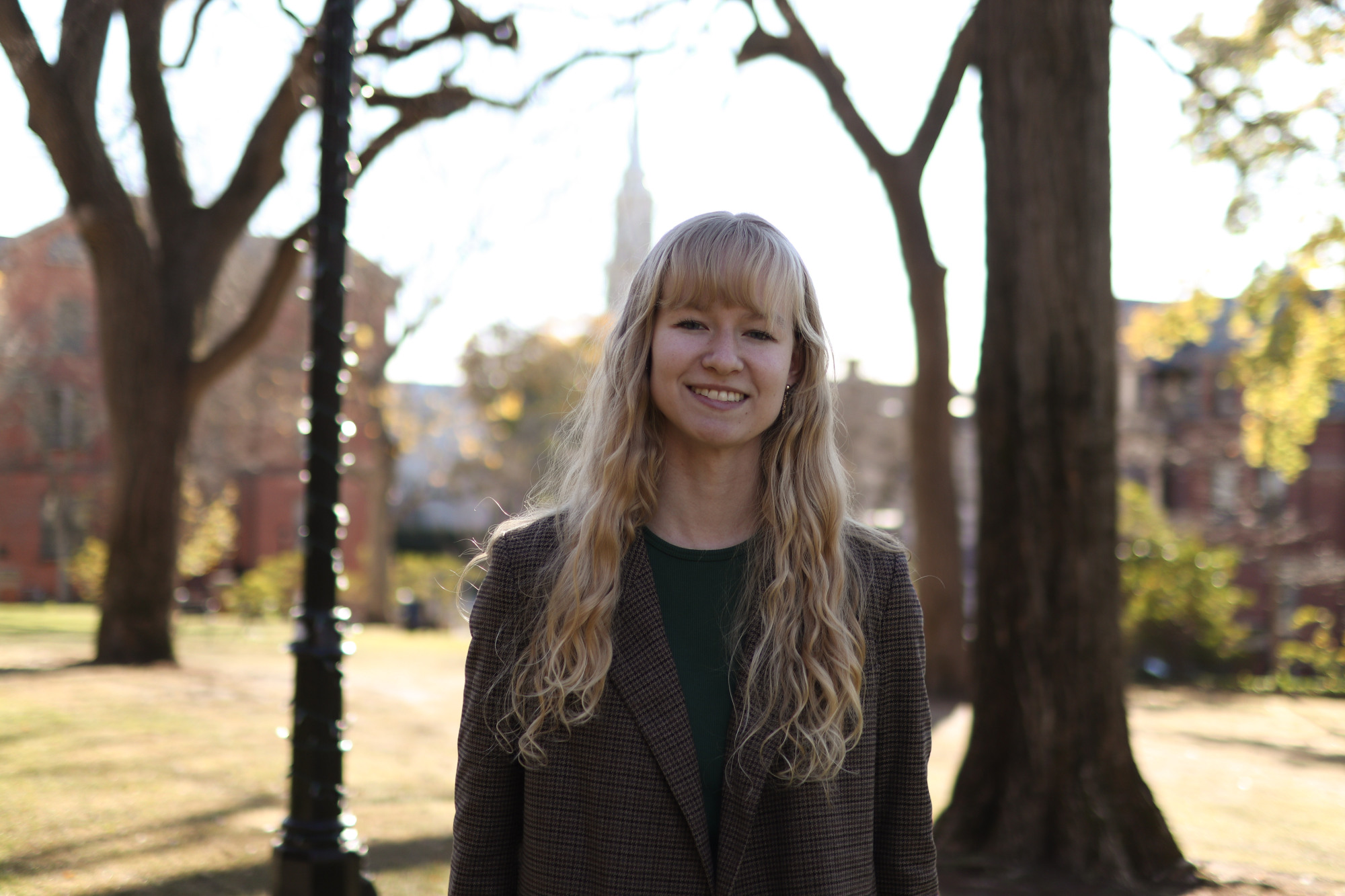
Megan Carlson is a graduating senior whose research focuses on functional genomics, gene regulation, and the 3D genome. During her time at Brown, Megan conducted genomics research in the Erica Larschan lab, where she investigated sex-specific nuclear organization in Drosophila and developed the project into her honors thesis. Outside of research, Megan led Brown Puzzle Club and Brown Puzzlehunt, helped organize Yarnaholics@Brown, and performed with the Wind Symphony.
This fall, Megan Carlson will begin a Ph.D. in Bioinformatics and Integrative Genomics at Harvard University. She is grateful for the mentorship and community that shaped her time at Brown and for the flexibility of the open curriculum, which allowed her to explore new interests every semester.
Fields of Interest
I'm most interested in functional genomics and gene regulation, and I have found the 3D genome particularly interesting throughout my undergraduate career. I think it's fascinating to detangle the layers of regulation that shape what a cell will eventually become!
Which research and extracurricular experiences have shaped your time at Brown?
During my time at Brown, I conducted genomics research in the Erica Larschan lab investigating sex-specific nuclear organization in Drosophila. I first joined the lab to work on a summer UTRA in between my sophomore and junior years and have continued to develop this project for the past few years into an honors thesis! Working with such large and complex datasets has been challenging but rewarding, and I have this project to thank for inspiring my decision to pursue a career in research.
I was fortunate to participate in the Computational Biology Summer Program through Memorial Sloan Kettering and the Tri-Institutional Computational Biology PhD program last summer. I worked with Dr. Viviana Risca, investigating the role of histone variant macroH2A in genome organization, an experience that has fueled my desire to pursue projects at the intersection of the wet and dry labs.
Outside of research, I've been involved in leading Brown Puzzle Club and putting together the annual Brown Puzzlehunt, helping to organize Yarnaholics@Brown, and performing as an oboist with the Wind Symphony. These communities have shaped my time at Brown, and I'm grateful for the experiences and relationships I've gained through them.
Which advisors or mentors have inspired you throughout your degree?
I am endlessly grateful to have been a part of the wonderful community in the Larschan Lab for the past few years. Dr. Erica Larschan has been the best mentor I could imagine, and I can never thank her enough for her encouragement and unwavering belief in me. I would also like to thank Dr. Mukulika Ray for guiding me through my first experience with independent research and always being willing to share her expertise when I'm struggling. I am also grateful to Sarah Gunasekera for her collaboration on our project and her advice and support as I've navigated the process of applying for graduate programs this year.
What is next for you?
I'm beginning a PhD this fall in Bioinformatics and Integrative Genomics at Harvard University!
What has been your favorite part of being a student at Brown?
I've loved taking advantage of the flexibility of the open curriculum! I took a 'fun class' outside my concentration every semester here and I'm so much the better for it.
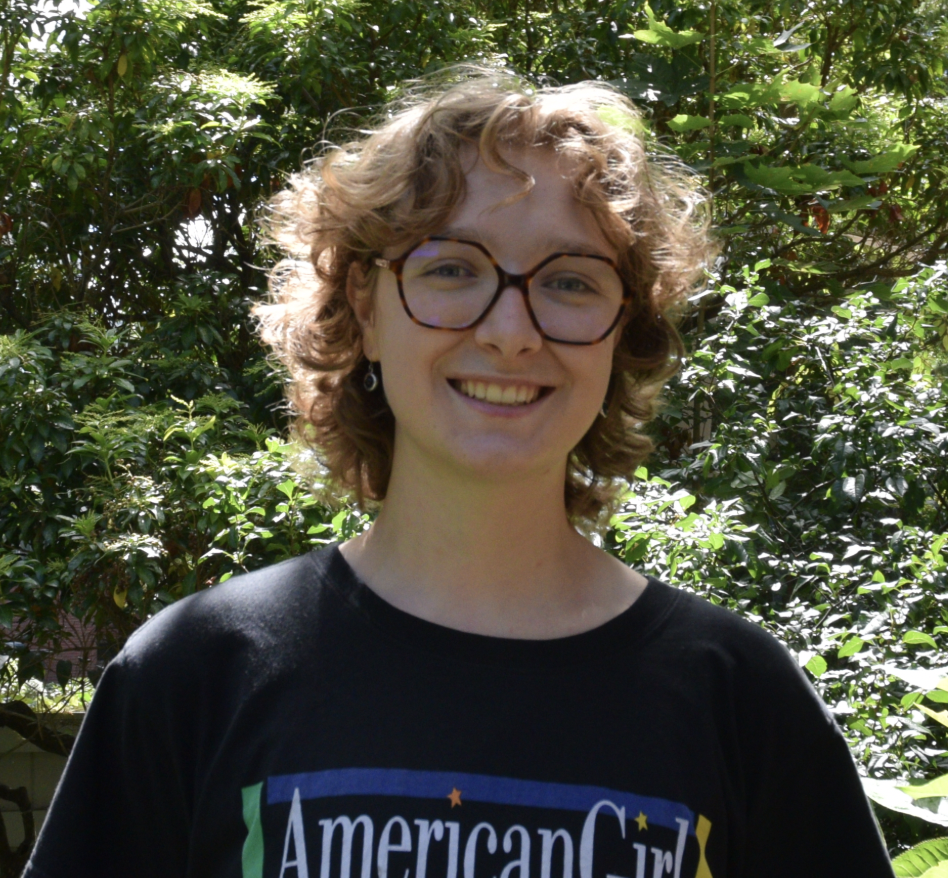
Skylar Walters is a graduating senior passionate about exploring viruses through computational approaches and applying language processing techniques to infectious disease research. Skylar is going on to pursue a Ph.D. in Computational Biology at the University of California, Berkeley.
Outside of research, Skylar has loved engaging in the student music scene with their banjo, participating in the Old Time String Band, and joining a rock band, Log Lady.
Fields of Interest
The world of computational pathogen genomics and computational linguistics! I've been fascinated by viruses my whole life (dating back to convincing my childhood self I had Ebola). Applying techniques from language processing is an interesting exploratory method.
Which research and extracurricular experiences have shaped your time at Brown?
The student music scene! Being involved in both the Old Time String Band and my rock band Log Lady has been a great way to explore community-based approaches to learning.
How has your Concentration in Computational Biology impacted your time at Brown and your future path?
The faculty of the CCMB + constant talks have exposed me to so many new routes to explore virology!
Which advisors or mentors have inspired you throughout your degree?
Katie Siddle has been my mentor for the past three years— I'm incredibly fortunate for the freedom she has given me in creating a project, and for the passion with which she teaches and mentors.
What is next for you?
Ph.D. in Computational Biology at Berkeley (as well as plenty of banjo)
What advice would you give to the students who come after you?
Try something new! There are so many opportunities to learn and experiment with your hobbies and research interests.
2025 CCMB News: Computational Biology Undergrad Awarded Prestigious Goldwater Scholarship
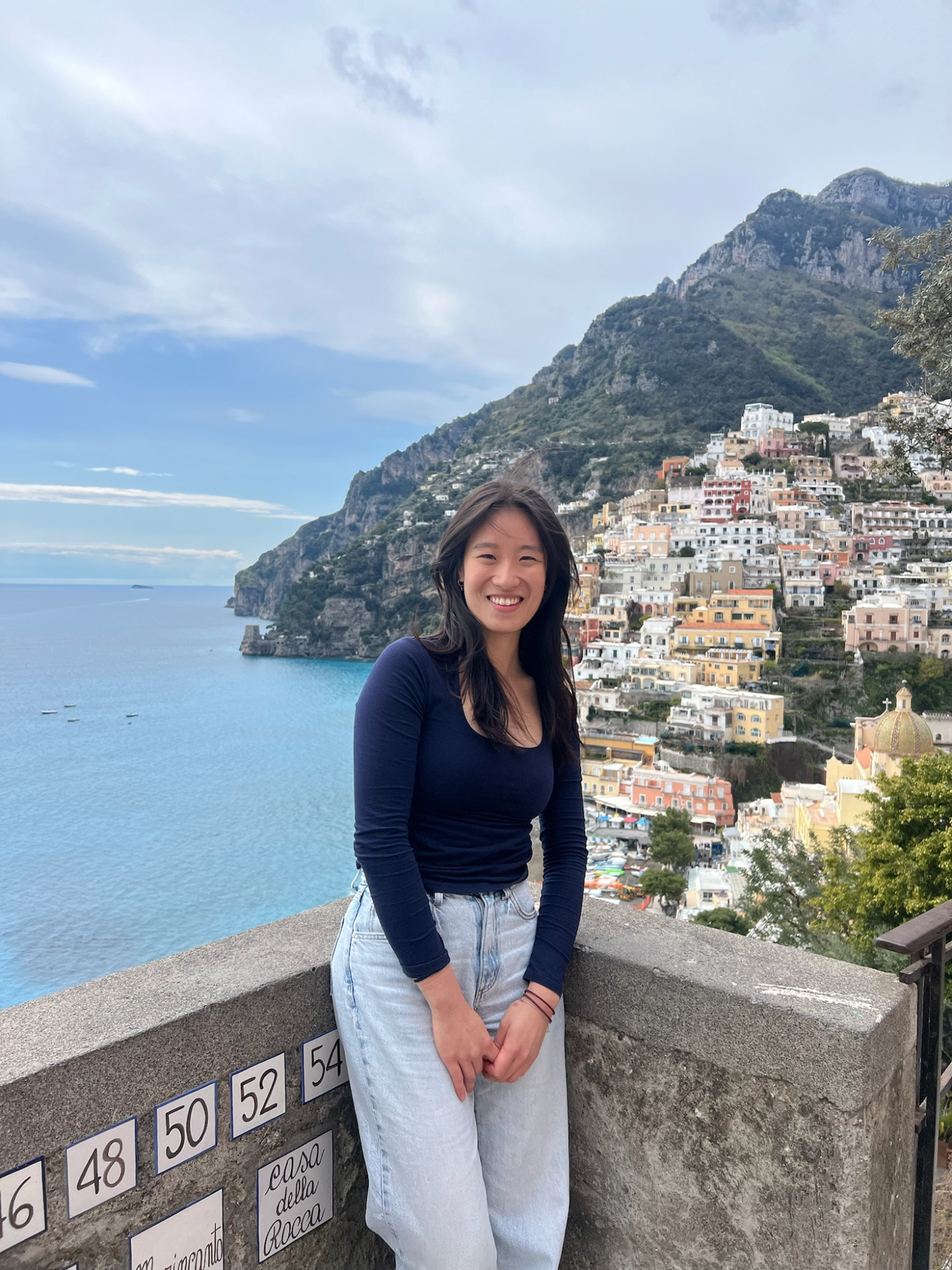
Sissy Han is a graduating senior in computational biology. During her time at Brown, Sissy conducted computational biology research in Will Fairbrother’s lab and became passionate about using computational methods and multi-omic data to generate meaningful biological insights. Outside the classroom and the lab, Sissy found a second family on Brown’s Women’s Golf Team. This fall, Sissy will begin a Ph.D. in Computational Biology and Biomedical Informatics at Yale University. She encourages current and future students to explore Brown, explore Providence, and say yes to every opportunity they can!
 Fields of Interest
My field of interest lies in developing interpretable, mechanistically motivated mathematical modeling and statistical learning frameworks for biological applications! For me, achieving meaningful biological insight has always been the most important part of any research project, and being able to do so at large scale with multi-omic data using computational methods has greatly increased the depth and breadth of the insights generated. I'm excited to see how analytical mathematical models can be integrated with more black-box machine learning models to create highly specific, highly interpretable insights.
Which research and extracurricular experiences have shaped your time at Brown?
I've been on Brown's Women's Golf Team throughout my time in college, and my teammates have truly become my second family. From having my first bowl of Andrew's pho with them freshman year to having our last golf trip down to New Jersey this year, they've become the people I can rely on to cheer me on anywhere and everywhere. That positive energy and resilience we've built over the years will follow me wherever I go.
How has your Concentration in Computational Biology impacted your time at Brown and your future path?
Being a computational biology concentrator at Brown has exposed me to many areas within the discipline and helped me navigate my evolving interests. I came into Brown knowing I wanted to explore computational biology, and I've been so lucky that the concentration is flexible enough for me to commit to it. The advisors and upperclassmen mentors that I've met have always been so supportive of taking classes across the university to best support my path in research and academia.
Which advisors or mentors have inspired you throughout your degree?
At Brown, I've been lucky to be in Dr. Will Fairbrother's lab for three(!) years, and I have learned so much, doing everything from molecular cloning to starting my own computational project. I've also had the honor of serving as a TA for Professor Sorin Istrail's classes many times now, and I am forever thankful to the fearless leaders and TAs before me who have been such incredible role models and friends. Huge shout-out to all of my mentors, collaborators, and friends at MSK and the University of Washington for giving me the opportunity to work with and learn from such brilliant scientists across the country.
What is next for you?
I'll be couch surfing and trying to visit all my friends over the summer :) In the fall, I'll be starting my Ph.D. in Computational Biology and Biomedical Informatics at Yale, and I'm super excited to start a new research journey!
What has been your favorite part of being a student at Brown?
Running into friends everywhere, at Brown or even halfway across the world!
What advice would you give to the students who come after you?
Explore Brown, explore Providence, and say yes to every Google calendar invite that you can! There's so much to do and so many people to meet that four years fly by in the blink of an eye. Don't be like me and end up having to go to an ice cream place a day in the last month of college to make it to them all.
PhD Students
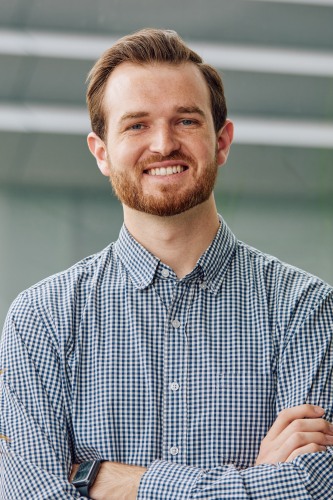
Peter Van Katwyk is a graduating Ph.D. student whose research focuses on using Machine Learning to better understand Earth’s climate, particularly how the Antarctic and Greenland ice sheets will contribute to sea level rise over the next century. During his time at Brown, he has explored interdisciplinary research at the intersection of Earth and computational sciences through the Department of Earth, Environmental, and Planetary Sciences (DEEPS) and the Data Science Institute (DSI). Peter will soon be joining Microsoft as an Applied Scientist in Seattle. He encourages current and future students to have fun, embrace mistakes, and give themselves space to learn and figure things out.
Fields of Expertise
My expertise is in using Machine Learning to understand Earth's climate, specifically how the Antarctic and Greenland ice sheets will contribute to sea level over the next century. This research is exciting not only because of the wide variety of both scientific and computational problems to work on, but the impact that understanding the changing climate will have on people worldwide.
What experiences have shaped your time at Brown?
I have learned the most during my time here at Brown when collaborating with people across disciplines. My research is interdisciplinary, merging Earth and Computational sciences, which enabled me to work with and learn from a variety of experts in their fields. This has been extremely beneficial, as it can be applied to whatever direction I go in my career.
My PhD in DEEPS and at DSI has allowed me to learn not only the technical skillset required to contribute to my field, but also to collaborate, to teach, and to surround myself with those that will push me to do my best work.
Who has inspired you throughout your degree?
I have been inspired by many people during my PhD. I have particularly benefitted from the support and knowledge of my advisor, Karianne Bergen, as well as mentors in both DEEPS and DSI, such as Baylor Fox-Kemper and Sohini Ramachandran, who have been invaluable in guiding me and providing feedback throughout my 5 years at Brown.
What has been your favorite part of being a student at Brown?
My favorite part of being a student at Brown is being a part of the community! Here at Brown there is a sentiment campus-wide that the people, faculty, and campus resources at Brown are truly here to support you and to help you be your best self.
What is next for you?
I accepted a position at Microsoft as an Applied Scientist and will be moving to Seattle. My wife is pregnant with a baby girl coming in August, so lots of big changes!
What advice would you give to the students who come after you?
Have fun! My best advice is to know that it's ok to mess up, to learn, and to figure stuff out. That's why you're here.
Affiliated Research & Teaching Students
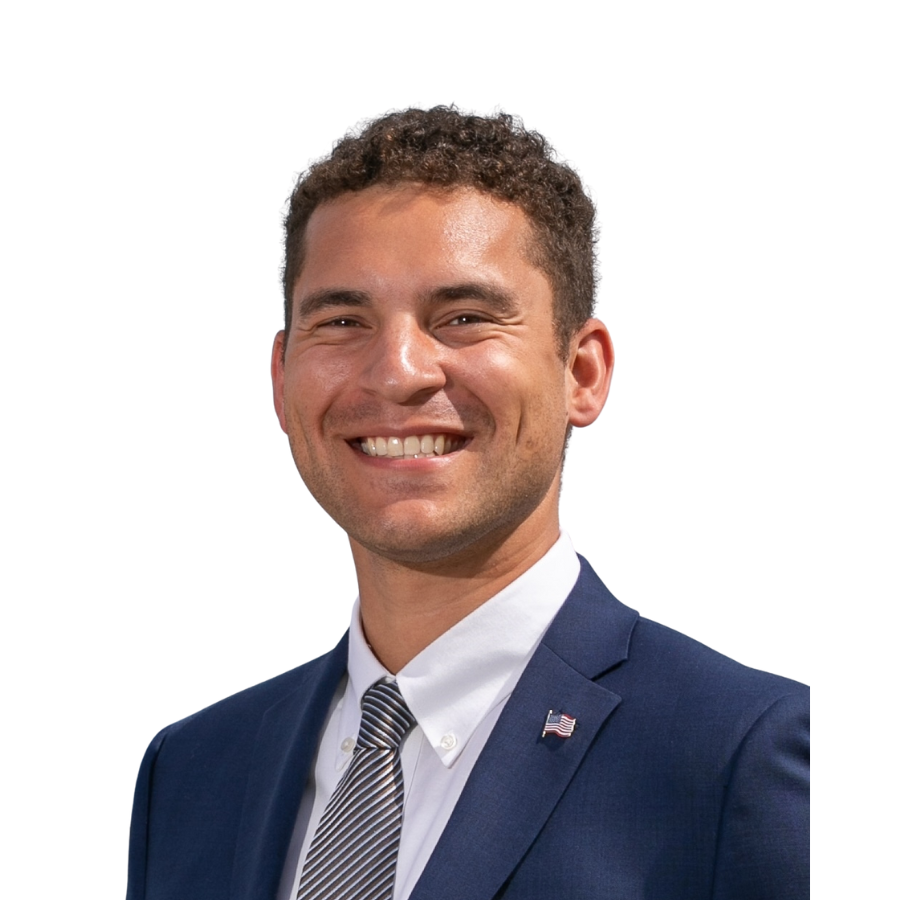
Terren Wise is a graduating senior in Design Engineering who has spent his time at Brown exploring interdisciplinary approaches to solving complex issues through the Center for Technological Responsibility, Re-imagination, and Redesign (CNTR) and working with U-FLi, military veterans, and nontraditional RUE students to promote community. During his time at Brown, Terren led the CNTR’s first Technology and Science Policy Summit, Terren Wise, connecting technologists, engineers, scientists, and decision-makers to communicate and collaborate across different backgrounds.
Which interests and experiences have shaped your time at Brown?
I am very excited about solving problems from an interdisciplinary approach.
I was a part of the first Technology and Science Policy Summit through CNTR. This wasn't just thinking of policy solutions; it was connecting technologists, engineers, and scientists with the policy and decision-makers. This was so fantastic to be a part of, seeing how people from different backgrounds can start communicating to solve complex issues.
Throughout my time at Brown, I have worked to try and work with communities that are often overlooked and worked to promote community. Out of these I worked with the U-FLi, military veteran, and nontraditional RUE students to create new experiences that transcend past single events. Community building is one of the most important things that I believe I have learned since my time at Brown and I hope continues on.
What has been your favorite part of being a student at Brown?
Honestly, the classes. I have fully taken advantage of the open curriculum to explore passions and interests. Never in my life will I have the opportunity to take classes out of pure curiosity, and that's what makes Brown so special.
What advice would you give to the students who come after you?
Try to get involved in things based on your interests. Don't be dissuaded because it's not in your concentration. As an engineering student, I don't have a lot of exposure with the CS department, yet I was still able to be a part of CNTR and loved every bit of it!
Everyone is so kind in the Brown network. I have received so much advice and kindness from faculty, staff, and alumni who genuinely want to see me succeed. I would not be this successful without my Bruno network, and I know what it means now when people say "Ever True".
Which advisors or mentors have inspired you throughout your degree?
I have the blessing and honor to have so many mentors who have guided me throughout my time at Brown that span across departments. I have been inspired by so many people who aren't even related to my concentration. Professors who are doing cool and fascinating things inspired me to reach out to find out more, starting a relationship that has lasted throughout my time here at Brown.
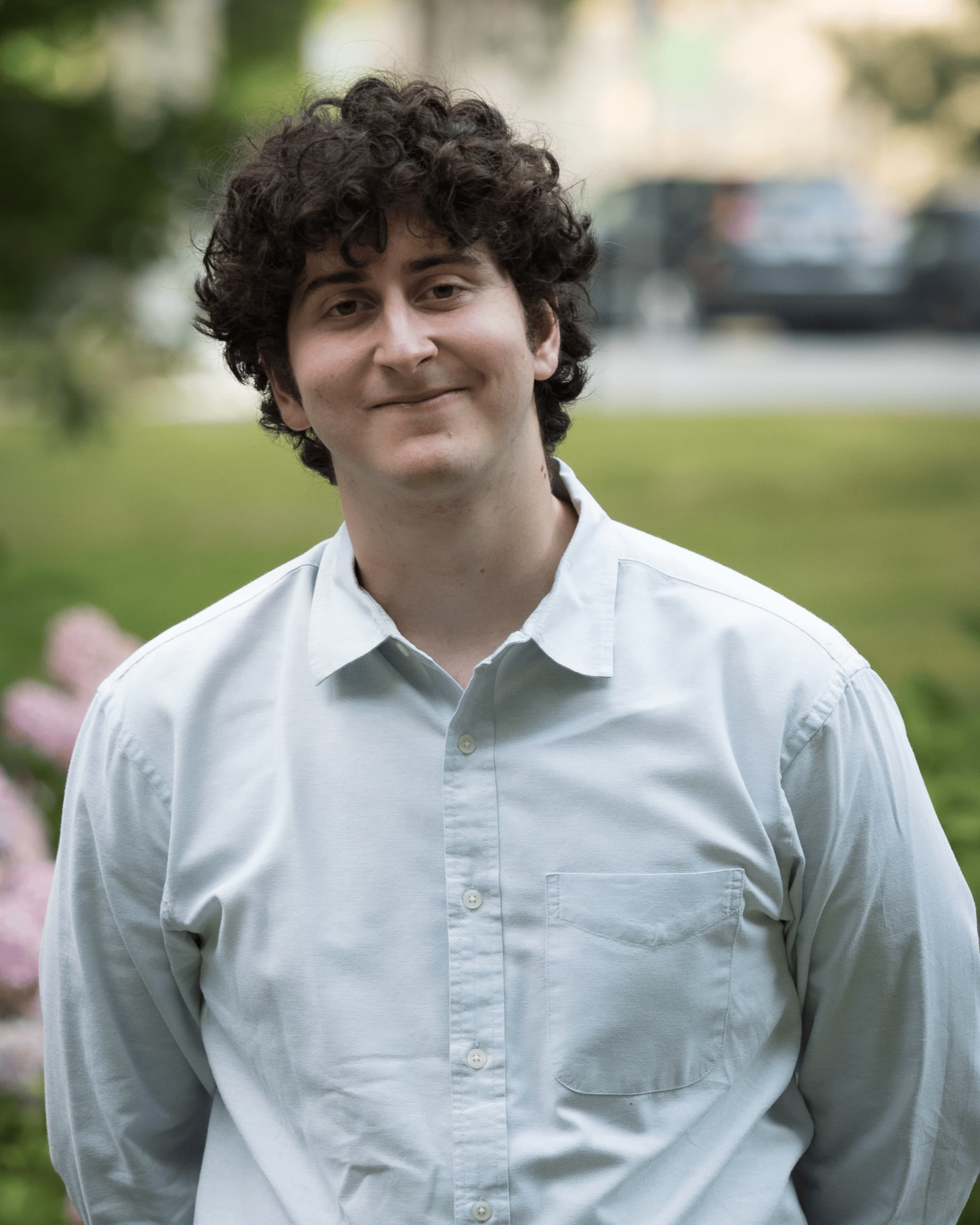
Asher Labovich is a graduating senior in Applied Math (with Honors) and International and Public Affairs. Asher has spent his time at Brown exploring applications of mathematics and machine learning, starting a machine-learning-driven election prediction and analysis platform called 24cast with the Brown Political Review, and completing a senior thesis on the mathematical underpinnings of looped transformers. Asher is grateful for all the passionate, smart, kind people he has met during his time at Brown. He will be starting at Liquid AI in Boston as a research engineer following graduation.
 Fields of Interest
I think we're at the very start of a long list of theoretical advances in machine learning and I'm excited to play a part in them! I'm particularly interested in Looped Transformers and Supervised ML, especially tree-based algorithms and theoretical analyses on inductive biases. Taking DATA 1030 got me interested in tree-based algorithms, and I got into looped transformers a while later when I started thinking about the maximum possible performance of small models with new architectures.
How has your Concentration and Data Fluency Certificate impacted your time at Brown and your future path?
The flexibility of APMA gave me the ability to develop a broad base in mathematics, which has been immensely useful in my research. I was able to take classes not only in APMA but also in DATA, MATH, ECON, and CS, all of which taught me new skills that have remained useful in future years. However, the best part of APMA is the people! Staying after class to finish proofs, working on amazing projects with passionate people, and learning from people with unique and fascinating skillsets made my experience truly special.
What experiences have shaped your time at Brown?
I really enjoyed working on 24cast, a machine-learning-driven election prediction platform hosted by the Brown Political Review, throughout my sophomore and junior year! It taught me how to lead and motivate a team, especially one with diverse interests across the academic spectrum. I'll be working in a similar team startup environment when I graduate and I can't wait to have some of the 24cast vibes once again!
I also loved studying abroad and absolutely recommend that everybody who can do so takes the opportunity. I had the time to travel both solo and in groups across Australia and Asia and they were some of the best months of my life.
Which advisors or mentors have inspired you throughout your degree?
I truly cannot thank Professors Zsom and Peyam enough for their support throughout my years as a TA and researcher.
I was the head TA for Professor Zsom's class, DATA 1030, and he taught me so much about teaching, even giving me the opportunity to give a lecture on tree-based algorithms to the class. DATA 1030 has grown a lot since I took it as a sophomore, and I'm so happy I got to play even a small part in that. For anybody who can take the course, I highly recommend you do so.
Professor Peyam was an immense help throughout my thesis as my project went through many iterations of failure after failure. He helped to keep me on track and gave me a unique perspective on the dynamical stability aspect of my paper that ended up forming a major portion of the paper.
What is next for you?
I'm working at Liquid AI in Boston! I'm a research engineer focusing on novel language model architectures for small, energy-efficient, private models. I finished my thesis on looped transformers a little while ago but have so many more ideas I didn't have time to dive deep into, so I'm psyched to continue working on them! Plus, I love Boston :)
What has been your favorite part of being a student at Brown?
The people! All of my friends are such passionate, smart, kind people and I love nothing more than listening to them talk about their interests. I've never once felt embarrassed or weird to be somebody who loves my work, since all my friends know exactly what that feels like. I am sad to be leaving them but I can't wait to visit!
What advice would you give to the students who come after you?
I think it's really easy to "utilize the open curriculum" as a STEM student by taking a few humanities classes as an aside and then just taking a bunch of required classes within your major. My advice would be to see the open curriculum as just as useful within your major as it is outside of it. Unlike a lot of other schools we have really lax requirements even within our major and I think it's a waste not to use that to your advantage and get a very broad base across disciplines of CS and mathematics. As an example, my thesis -- which I expected to be mostly empirical -- ended up requiring lots of linear algebra, differential topology, and dynamical systems, and while I had the first (go MATH 540!) I had to do a lot of research to learn the latter two. You'll never know what you'll need to finish a problem and it never hurts to have a broad base.
Related News
News from DSI
Faces of DSI: Tomo Lazovich
Assistant Professor of the Practice Tomo Lazovich’s work focuses on AI governance and policy, bridging technical, legal, and societal perspectives on algorithmic systems. At Brown, they are developing innovative courses and leading research projects that help students and professionals understand the real-world impacts of AI and data-driven decision-making.
Read Article
News from DSI
Faces of DSI: Linda Clark
Associate Teaching Professor Linda Clark is a pioneer in bringing together data science, education, and policy at Brown. As the Academic Director of DSI’s new online Master’s program in Data Science: Policy, Governance, and Society, she is cultivating a new generation of professionals who handle data through a lens of policy, ethics, and human impact.
Read Article